ARZU ÖZYOL, CEO at HYDRA : “THE PARTICIPATION OF WOMEN IN DECISION-MAKING MECHANISMS RELATED TO WATER AND ENVIRONMENT IN TURKEY IS ALSO QUITE LOW”
In recent years, women and water resources issue has been brought to agenda on international platforms. Especially in underdeveloped countries, women come to forefront as the primary actor in accessibility and usage of water resources; and the projects that are related to water resources concern women in the first place. Accordingly, we talked to Mrs. Arzu Özyol, CEO at “HYDRA Project and Consulting Co.”, about the relation between “water and development”, and the ongoing works, which have been carried out in axis of women all around the world and in Turkey.
ORSAM: Could you tell us about yourself in brief?
Arzu Özyol: I was born in Ankara, in 1960. I graduated from METU, Environmental Engineering Department, in 1983. After giving a quite long break, I did MBA in 2000's. Right now, I am doing my doctorate in the participation in environmental policies. As the socio-political environment issue grabs my attention more than the environmental technologies, I prefer working within this frame.
Could you briefly tell us about the projects that you are carrying out, for the time being?
We have been carrying out European Union projects. As we prepare these projects within the concept of sustainable development, our working area includes subjects such as; environment, life-long education, vocational training, and gender mainstreaming. Particularly, the gender mainstreaming stands at a crucial point in my life, because I both include issues related to women in the projects and also I am the founding chairman of the Turkey office of the BPW (International Federation of Business and Professional Women). Besides, I am the Turkish representer of the UNESCO Center for Women and Peace group. At the same time, as my profession requires, I try to analyze water and woman together.
What kind of studies have you carried out related to the subject, so far? Especially, what is the position of the 2009 World Water Forum it occupied in these studies?
Woman component was created in the 2009 World Water Forum. I suppose that we so much desired the systematical consideration of Water and Woman issue altogether, but unfortunately some problems occurred, as it does whenever the human factor is included. As I took office in the environmental committee of the woman organization, of which I am the member, I followed the environmental policies in international processes. Within the United Nations, I work both in the Commission on the Status of Women, and also in the Commission on Sustainable Development. In this way, I can find a chance to have an access to brand new information and developments. I also participate in the meetings of the “Woman for Water” platform, as the representer of my corporation. Therefore, I am trying to closely follow the agenda, and I use these fresh information that I obtained from here. Although the issue is neither related to environment nor to water, we place environmental awareness modules into the modules we developed in woman training. (Environmental Competence Module) is a module that I developed within the frame of an EU Project; right now, it is being used by a reference institution, which is called “European Association of Adult Education”, working on the adult education in Europe, by being included in certain vocational training programs.
Can you tell us about the relation between water and woman?
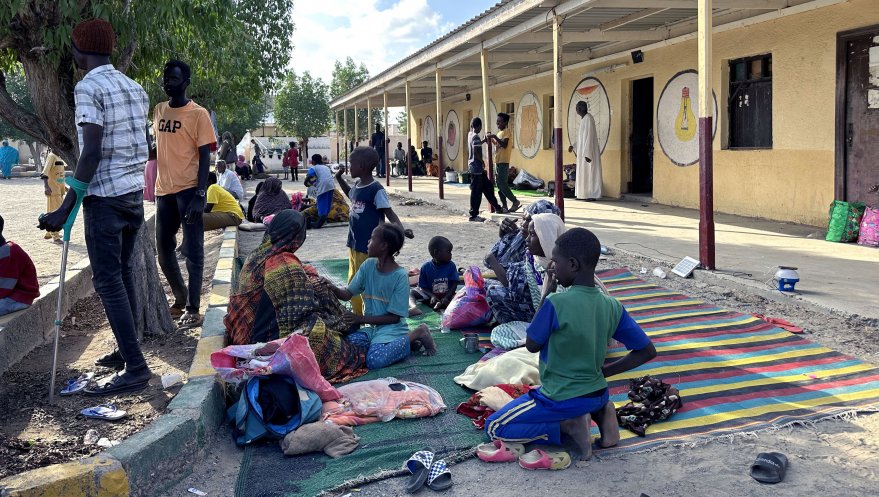
During the presentation that I made in the 2012 Water Forum on May 3rd, I underlined the fact that this relation dates as far back as the beginning of the history of humanity. I believe that the Goddess of Earth Gaia's turning her body into a water wave form and her dancing; sweat drops' running down from the body of Gaia and these drops' merging in the soil and the soil's turning green and its refreshing the earth is the best scene ever telling the depth of the relation between water and woman. Also the fact that medieval women used water and nature as an instrument in order to heal, and then their setting on fire after having been stigmatized as witch, is also a common story. When looking today, we see that water is wasted with impunity as if it is an everlasting resource -just like wasting the woman effort- because of the fact that 2/3 of the earth is covered with water. Particularly in places, where patriarchal system prevails; women are deprived of education, kept away from the professional life, cornered to the triangle of home and family, and they meet the requirements of the family by looking after and protecting. Having an access to water, carrying it, providing the household hygiene by using water, or cooking are counted among the responsibilities of woman. Because of this necessity, many women have to struggle with the backbone and joint diseases. In addition to this, women, who are subject to direct fire at home, mostly go through breathing and visual disorders. There are many water originated problems, which come to mind or not, throughout a woman life. The primary reason, why the girls living in rural areas do not keep on their education, is the problem of accessibility to natural resources. Many women cannot take part in the production chain, which would make money, because of the lack of education. Eventually, 70% of 1,6 billion people, who earn less than 1 dollar per day, is composed of women.
One of the most significant criteria that is used in poverty measurements is the daily amounts of water and energy usage. Civilization and prosperity increase in parallel with the use of water; but the overuse of water also leads to a different kind of poverty. This is one of the issues I have been highlighting and trying to solve. I believe that people should think about the role of woman in the management of water in addition to the other factors such as the proper use of water and providing sanitation, in order to solve the vicious circle on this issue.
What is the first place, where woman and water was first associated with each other, on the world?
It started in Ghana. It was observed that women, who lived around the basin in the neighborhood of the Ganges river, were extremely and severely affected by the water shortage. We know that many studies were carried out related to the issue. The studies, which were carried out, showed that the women living around the Ganges valley in India had thoroughly water-indexed lives; and the variety of products they planted, their way of using the soil, and even their working hours were arranged depending on the amounts of precipitation and on the precipitation periods. We know that women, who continue to live by being indexed on water, are not as effective in the water management. While creating water policies, the fact that woman's participation and role is almost zero is a great injustice for both woman and development. Because as a result of this exclusion, the experience of women related to the issue turns into an inactive workforce.
What is the overall situation in Turkey?
As all around the world, in Turkey as well, 90% of the population occupying with agriculture is woman and most of them work as unpaid family workers without insurance. The Turkish women, who work in the agricultural sector, carry water, walk for miles in order to access to water, use water for cooking, and cannot go to school because of the poverty-related reasons, just like her fellows. On the other hand, as the female participation to the decision-making mechanisms related to water and environment in Turkey is low to a large extent, women cannot make their own choices for their own futures. However, if more women participate in the decision-making processes, they will make their own lives easier within the frame of their experiences, and they will be able to take the decisions that would enable them with increasing their life qualities more easily.
Has the way how women in the region were affected been evaluated after the projects were completed? Is there any statistical data?
One of the most important problems existing in Turkey is collecting data and creating a data bank. The issue of collecting sex-based data, which has been carried out in the developed countries for years, started to be mentioned in Turkey's agenda quite recently. Therefore, it is not possible for us to understand the influences of the public work projects, social transformation projects, which were carried out within the concept of the GAP and the Baku-Tbilisi-Ceyhan Project, on the women's lives in the region. Maybe the first breaking point of the social transformation turned out to be negative unlike the expectations, or maybe the underlying reason of the women deaths, which is on the agenda, is the unprepared social transformation. However, the failure on collecting data prevents developing exact solutions related to the issue. What is mentioned today is a consequence of the pilot studies, which were carried out by the NGO's in the region. We have carried out fieldworks in Şırnak, Konya, and in Urfa. In fact, we also carried out an EU project for Şırnak, we are waiting to see the result. The project came out as a result of the fieldwork in the area. There were a lot of demands coming from Iraq for tomatoes. We prepared a project in order to make the women in the region start doing greenhouse farming. Within the scope of the envisioned training program, both the training of greenhouse farming and also personal development program are provided for women. In addition to this, environmental competence module was also added to the scope of the vocational training program. So that, women who will do greenhouse farming will be taught how to use soil and water as well. Thus, the goal is that the change which was provided with the project creates a multilateral and positive effect on the woman life. We can see the change in the lives of women, who could be employed thanks to the projects. Feeling the pleasure of earning money (even if only a small amount), woman does not have to wait for her husband to come home anymore when her child wants to buy something. Of course, the woman, who becomes self-sufficient and who could meet the needs of her child, is more self-confident and happier. Nevertheless, all of them remain only at an observation level. Unfortunately, within the unity you asked, it is not possible for us to evaluate the status of women by comparing 5 years before the GAP project and 5 years later.
During the meeting, which was held in Istanbul in the beginning of May 2011, what kind of activity you took part in?
I took part in the activity of 'woman in water policies'. That was a good one. Among the participants were Women for Water Chair Alice Bouman, and Lesha Witmer. The European Secretary General of Soropmisits came from Switzerland. They also told about what kind of projects they carried out related to woman, especially in underdeveloped regions. Mainly, certain advices and sample works, which are related to the requirements for increasing the participation of women in the water policies, were mentioned.
Is there any place from Turkey as a sample work?
No. Most of the examples were given from Africa and Ganges. In other words, there is not that much project, which was carried out related to water, in Turkey. For instance, there is a BPW Project, which has been conducted by the countries having coast to the Danube river in the Eastern Europe. Besides, I know another project, which was carried out to provide a sanitation training for women living in rural areas in Russia by the Women for Water Platform. There are so many projects, which are conducted in India and African countries with Woman and Water themes, but as far as I know, there is no any project directly related to the issue in Turkey.
In Turkey, studies have been carried out related to woman, but its association with water has recently been started.
That's right. Small scale local studies on building healthy infrastructure mainly in residences, or on providing the sanitation of water have been carried out since 2008.
As a matter of fact, sanitation is one of the most important instruments for the management of water. In this way, you both preserve water and also you use it properly.
You also use at a normal level. I believe that trainings on how to use water in agriculture should also be provided, in addition to sanitation. Because the major part of the work force in agricultural field in Turkey is composed of women. Therefore, raising awareness among women on this subject, would bring a solution to certain problems threatening the agriculture; such as the salinization of soil.
There is no competence in giving the training, for instance irrigation unions.
Right. Maybe in-house training could be necessary for the concerning institutions. Thus, training should be provided not only directly to the target group, but also to the ones who would provide training to the target group as well. We implement this method for every issue related to Gender Mainstreaming. For example, when domestic violence against women is mentioned, we argue for providing training for the ones causing the violence or for the ones the victims ask for help in the first place such as; doctors, policemen, prosecutors and judges rather than victims of domestic violence. Therefore, providing the ones working in the related public institutions with training would be useful to raise the awareness among women to water.
Do you receive any support from the public institutions on “water and woman”?
No. Even the General Directorate for Status of Women, which carries out studies on woman in Turkey, has difficulty in finding data on Water and Woman. In fact, this situation is problematic not only in Turkey but all around the world. As it happens on every subject that is grounded from all of the third generation rights, unfortunately it is quite difficult and limited to have an access to the related data, as the research on “Woman and Environment” only dates back to some ten years ago. In early 1980's, woman was also listed among the exploited resources just like the natural resources, and the underlying cause of the exploitation of both of them was claimed to be man. This approach remained on the agenda for a short period of time under the title of eco-feminism. When the environmental problems attained an uncontrollable level in 2000's, the issue started to be handled in a multidimensional way. Right now, mainly, the role of participation in creating environmental policies is being examined. As woman is an important part of the environmental management, woman is included in the subject as well.
Are you planning to take part in the World Water Forum to be held in France in 2012?
Yes, I do. However, it is not certain yet if this participation will be individual or are we going to organize an activity for BPW. But the fact that I am going to represent BPW in Rio+20, excites me so much.
Following the Second Istanbul International Water Forum, what did the Global Summit of Women consist?
I believe that May 2011 was quite important for Turkey. Water Forum took place on May 3rd, 4th, and 5th. We hosted some 20 foreign guests on an activity we carried out for BPW-Turkey on May 4th. We introduced the UN's Women Empowerment Principles to Turkey. The Global Summit of Women began on May 5th. One of the sessions in that summit was the environment and woman session. Right after the Global Summit of Women, Conference on the Least Developed Countries began. In this conference, I delivered a speech entitled, “The Place of Woman in the Tourism Offer Chain”. In my speech, I emphasized on the importance of Environment for Tourism. The last international activity of May was the conference of EU Council.
Are the EU and UNESCO the groups, which support your work?
If the Projects we prepare for the EU are approved, we can receive grant. However, there is no any financial help that we directly receive. Nevertheless, I think that participating in the processes, which are carried out especially in the United Nations, is the greatest fortune. Because in this way, you can follow each talk, and you can have an immediate access to the recent materials, documentations, and links. Therefore, we provide the most part of the in-kind aid from various groups of the United Nations and from the European Union, even if it is not monetary.
Some articles, which criticize the European Union Water Framework Directive, do not touch on the gender issue at all.
Yes, you are right. However, the common usage of “Gender Mainstreaming Strategy” reduces the problems taking place in the field.
It was also criticized a lot, but the European Union is slowly completing the lacking parts on the Directive.
The only relief is that there is no any bad intention. There are right things in terms of philosophy and priorities. It can be compensated the moment, when there are missing parts. It comes to mean that it is overlooked, not avoided it with bad intentions. The problems, which are encountered in the field, are tried to be eliminated by the additional documents in the first place, then its legal infrastructure is completed.
Thank you for making time for us.
You are welcome.
* This interview was carried out on May 25th 2011, in Ankara “Hydra International Project and Consulting Co. by Dr. Tuğba Evrim MADEN, ORSAM Water Research Programme Hydropolitics Advisor.
** Attachment: The Official Report of the Woman and Water Policy Session of the Second Istanbul International Water Forum (in Turkish) |