DR AL-MOSSAVI: “FEDERAL GOVERNMENT CAN MAKE THE WATER RESOURCES MANAGEMENT DIFFICULT IN IRAQ”
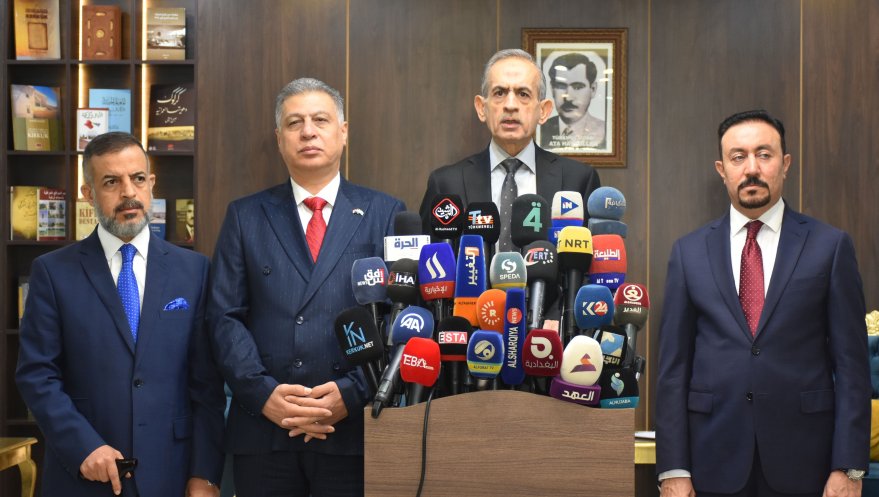
ORSAM Water Research Programme made an interview with Dr. Betül Al-Mossavi, Councillor of the Iraqi Cultural Office in Stockholm, on water problems in Iraq. Al-Mossavi, who wrote a book entitled "The Turkish Policy Towards the Arabian Gulf Since 1991 and its Future Doctrine", stated that Iraq tries to put certain projects into practice as soon as possible in order to lessen the water problem of the country. Al-Mossavi indicated that the federal system structure could lead to new problems in terms of the management of water resources in Iraq in the future.
ORSAM: First of all, thank you for having us as guest in Baghdad, on behalf of the Iraqi people. Could you interpret the State of Iraq's viewpoint on the water problem between Iraq and Turkey? And how do you think could the water problem be solved?
Dr. Al-Mossavi: The Iraqi government, academicians and politicians think that sometimes Turkey use this problem for her political gains. And she turns the issue into “water instead of oil”. Therefore, we need to come to an agreement as soon as possible. Is this a transboundary river, or an international river?
ORSAM: Turkey had a three stage plan she suggested for the solution of this issue. This plan proposed assessment of water and land resources of the Euphrates and Tigris Basin, and allocating waters accordingly. Nevertheless, this plan had been rejected by the Iraqi and Syrian governments. There is a problem on the completion of the Euphrates and Tigris basin datum and then allocating the waters between countries. How do you interpret this?
Dr. Al-Mossavi: Iraq has come out of war and has been going through political problems. Turkey carried out projects within this process and constructed dams. The quantity of water reaching Iraq has decreased and this situation has caused damage to us to a large extent. Agriculture is about to come to an end in Iraq. Many places have become desert, and deprived of clean water. These problems have drawn a bad image for Turkey in political aspect. The fact that Turkey carried out this kind of projects instead of helping us in that period caused her to be perceieved as an opportunist country.
ORSAM: Is this the general opinion in Iraq?
Dr. Al-Mossavi: Both political circles and academic circles share the same opinion. When you ask people the reason underlying behind the water problem, you hear the answer that “Turkey cut the water”. The Iraqis think that Turkey took advantage of Iraq's weakness, and that she tried to cut the water in that period. People say that she would not dare, if Iraq still had her old power. And this situation leads people to consider Turkey, as an enemy who takes advantage of Iraq's weakness.
ORSAM: Don't the Iraqi academicians know that these projects date back to very old times, and in fact that some of them have been planned since 1950's?
Dr. Al-Mossavi: Even if it is known that such a project existed 50 years ago, some circumstances have changed. Most of the agricultural regions in Iraq depend on rainfall, not on rivers. However, the rainfall has declined in recent years, because of the global warming, and people started to need rivers. At first, people were afraid of the possibility of floods. Nobody ever thought of decrease in rainfall. And Turkey's decreasing water coincided with Iran. The Karun River was completely cut. People went through major water problems. The Iraqi expected a total support from Turkey in such a period. There was an expectation from the new government to be with us. This expectation still exists. We want Turkey’s to support and help.
Iraq had always been in war since 1980. The possibility that a country, which was in war, thinks about water and carries out projects related to its usage was quite low. It is much easier for Turkey, which has not been going through war, to carry out this kind of projects.
ORSAM: After Iraq gains her stability with the new Iraqi government, what kind of projects does Iraq plan to carry out in order to develop the country's water infrastructure?
Dr. Al-Mossavi: As far as I know, the Ministry of Water Resources allocated large amount of money from the budget for projects in order to use water as best as possible.
ORSAM: As a political scientist, how do you think the federal system in Iraq affects the water management?
Dr. Al-Mossavi: This issue could be a major problem in the future. Just like Turkey cuts the water today, in future the Kurdish region could also cut it. This problem should already be worked on, and certain agreements should be made. I would like to indicate that in our Constitution, it is written that the federations have to share their rights and assets with the whole Iraqi nation.
ORSAM: What can the Iraqi and Turkish academicians do independently of the politicians, in order to solve this problem?
Dr. Al-Mossavi: This problem can only be solved by an international agreement. Academicians should primarily agree on the concepts. Is this an international water? Is that a transboundary river between Turkey, Syria, and Iraq? This river does not belong to a country. This river belongs to all the countries, through which the river passes. Everyone should take its share with the agreement to be signed. In addition to this, an international commission should be created through academicians. The problem could only be solved in this way.
ORSAM: Thank you for your time.
* This interview was carried out by ORSAM Water Research Programme Specialist Dr. Seyfi Kılıç in Baghdad at 1 December 2011.
|