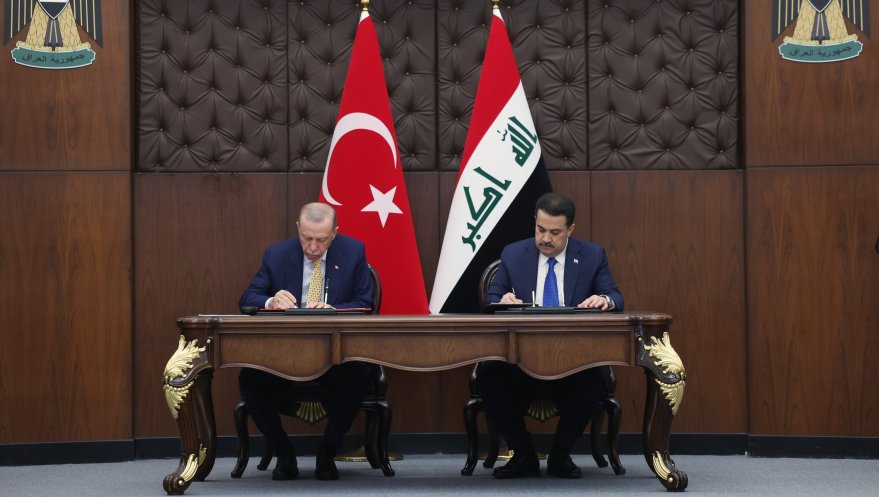
The nuclear exchange agreement signed by Iran as a consequence of Turkey and Brazil’s efforts is a progressive step that will influence the entire world. It is certain that the uranium exchange agreement has a central place on the international stage and is a multidimensional event. First, we think this agreement will play a role in resolving the crisis between Iran, the United Nations Security Council members and the group set up by Germany. Another dimension of the agreement is how it will affect Turkey’s relations with western nations in general, and in particular, the US. Another dimension emerges in the context of reflecting the shifting global power balances. We will attempt to analyze these dimensions of the agreement in this text.
The First Dimension: Will the Problem Be Resolved?
The crisis, which is said to have arisen between Iran and western nations due to Iran’s efforts to acquire nuclear weapons, has been going on for a long time. As a general result of past years the question is not really Iran’s nuclear weapon technology or how much enriched uranium Iran has. The question is the deep doubts that the parties have about each other’s intents. The reason for Iran’s desire to acquire nuclear weapons is said to have something to do with the Iranians’ feeling of being strategically surrounded. The US thinks that Iran wants to develop these weapons for purposes other than defense and deterrence. It is thought that the US and Israeli presence in the region is Iran’s primary target. In addition, the doubts that the parties have about each other’s intents emerge in another context. The US thinks that Iran hasn’t given an inch in negotiations, and that Iran is trying to gain the time needed to acquire nuclear weapons by dividing the international community. The western powers’ general view is that Iran will want to escape its pressures by using its negotiating power in an atmosphere of increasing international pressure on Iran. Iran believes that the US has already made up its mind about Iran, and therefore the US wants to eliminate Iran’s present regime using every possible stratagem. According to most Iranians, the US tries to isolate Iran from the international community by depicting Iran as the devil. In this atmosphere, Turkey and Brazil’s efforts to launch a serious negotiation process between Iran and western nations may not yield permanent results.
Turkish and Brazilian leaders, both during the agreement negotiations and after signing the agreement, explained that these negotiations went on with the full knowledge of the West. The exchange agreement first appeared in October, 2009 in the wake of US prompting. The general idea behind this agreement is to export Iran’s low density enriched uranium to western nations, and after enriching this uranium appropriately, returning it to Iran for use in nuclear energy and medicine. This plan foresaw Iran giving up all its uranium at once and its enrichment by western nations, but was not signed because the parties didn’t trust each other.
The recently signed agreement guarantees that the uranium, enriched for use in medicine, will definitely not be used for nuclear weapons. According to the signers, this agreement will gain time for the parties and comprehensive negotiations will continue during this process. At first it was expected that Iran would export all its low density enriched uranium, but the recently signed agreement stipulates that Iran will export about 60% of its uranium. In October, Iran had 1200 kilos of uranium, but now this figure represents 60% of Iran’s total uranium. At this juncture, the western nations seriously object to the fact that Iran will still have a large amount of uranium to enrich, even after this exchange operation. It is believed that Iran greatly increased its supply of low density enriched uranium between last October and this May.
The agreement also provides that the mentioned exchange operation will take place in Turkey. Iran will export uranium to Turkey. It will stay in Turkey for one year and then Turkey will return the uranium, enriched to 20% by western nations, to Iran. It is proposed that Turkey will return Iran’s uranium, if the western nations do not do so. From this point of view, it can be said that the real basis of this agreement is Iran’s faith in Turkey. An item that could be a problem for Turkey is that western nations may force Turkey not to return Iran’s uranium. In this scenario, with negotiations blocked and rising doubts about Iran’s intentions, Turkey would face a new crisis in its relations with western nations, were it to stick to its agreement return the uranium to Iran.
After the announcement of the agreement, a variety of opinions were expressed in international circles. The most surprising was the reaction of Clinton, the US Secretary of State. Underlining that it has absolutely no trust in Iran, the US explained that it would introduce a UN Security Council draft resolution proposing sanctions for Iran. It was said that UNSC members agreed to such a draft resolution. Doubts about Iran’s intentions were not relieved by this explanation since it is thought that Iran was continuing its standard politics of gaining time by signing this agreement. The important point for the West is not the content of the agreement, but its timing. It is thought that Iran is trying to escape pressures with a last minute maneuver, since the UNSC is now discussing an economic embargo on Iran. It is believed that Iran takes advantage of Turkey and Brazil’s good intentions. The predominant view sees Turkey and Brazil being used by Iran.
In response to the West’s reactions to the agreement, Turkey and Brazil said that the West knew about this process, which was in accord with US expectations. It is known that President Obama encouraged Turkish and Brazilian leaders to in this direction. Giving a chance to the negotiation process with Iran is essentially in accord with the foreign policy that Obama has implemented since he has been in office.
Turkish views that see the agreement’s advantages as a confidence building step preliminary to a permanent solution to the problem are not respected at all. Turkey’s emphasis on this point shows that the agreement is not a definitive solution. UN Secretary General Ban Ki Moon and the former president of International Atomic Energy Agency, ElBaradei, have also said that this agreement should be evaluated in this sense.
In these circumstances, Turkey and Brazil were disappointed when the US said that it would propose an embargo on Iran to the UNSC. Neither the western media’s appreciation for Turkey and Brazil’s efforts, nor Russia and China’s reluctance to support sanctions after this agreement satisfy Turkey and Brazil.
The Second Dimension: The Agreement and Turkish Foreign Policy
This agreement is in accord with the basic parameters of Turkey’s recent foreign policy. Accordingly, Turkey feels responsible for events in the region, should actively solve regional problems, not only before the problems emerge, but also after they emerge, by deploying the strategic wealth of its history and geography. These kinds of policies are both a historical responsibility and a real political necessity for Turkey. The important point in the context of Iran is that Turkey is one of the nations that would benefit most from the resolution of the problems between western nations and Iran. A potential embargo on Iran would badly damage the Turkish economy, and a military operation against Iran would cause instability and chaos in the region. In either case, Turkey will be negatively affected. Turkey is one the nations that would be harmed most by the deterioration of stability in the Middle East due to the Iranian crisis. If producing nuclear energy does not satisfy Iran, and it decides to produce nuclear weapons, Turkey’s security will be negatively affected. This situation would inevitably increase Iran’s regional significance. The risk of nuclear weapons being used in regional conflict will be permanent. Turkey might choose the same path in order to be equal with Iran, and this would damage Turkey’s EU membership process and its relations with the US, and lead to unproductive use of its limited resources. Turkey will obtain more security by successfully resolving the Iran crisis. Turkey will be perceived as a country that plays an active role in resolving regional and global problems, conducts mediator activities based on goodwill, aims to create mutual confidence in foreign politics and integrate excluded nations with the global system. The character of the country, which applies basic EU foreign policy norms, will strengthen Turkey’s foreign policy. It will also increase Turkey’s soft power, which is getting stronger in the Middle East. Turkey’s new foreign policy, which doesn’t ignore regional problems, perceives neighbor’s problems as its own problems and proposes regional integration, will gain a lot of ground. Turkey’s successful mediator role in the termination of crisis between Iran and the West will be evaluated as the success of its continuing rhythmic diplomacy and multidimensional foreign policy. Since Turkey claimed that it had a vital role in solving the problems between the West and anti-western circles, especially in the political conjuncture that followed September 11, a success in the Iranian context would legitimate Turkey’s views on these matters.
Third Dimension: Turkey and the West
Another important dimension of this agreement is how Turkey’s approach will affect its relationship with western nations during this process. Some western nations, notably the US, approached this subject very cautiously, explaining that they had still doubts about Iran’s intentions both before and after the announcement of the agreement. The real point for western nations is not its content, but its timing. It is believed that Turkey accidentally played into the hands of Iran.
The possibility of Turkey opposing the western nations is increasing day by day. Important EU nations, and notably, the US have decided to sanction Iran and military options remain open. Turkey will be at least impartial, if it doesn’t refuse this subject in the UNSC. Given its role in the nuclear exchange agreement, it is almost impossible that Turkey would say, “yes,” in a vote on sanctions. Turkey’s opposition to the West on this topic will increase the views about axial dislocation of Turkey’s foreign policy. Stressful relations with Israel, Turkey’s good relations with the potential enemy nations of the US and Turkey’s approach in Iran crisis will increase the perception that Turkey is getting far from western camp.
It will reinforce the perception that Turkey’s policies are no longer West oriented, and that it looks at events in its region and in the system from its own point of view. Actually, this situation can’t be explained by the AKP’s strategic policies. As we have seen over the last 10 years, western nations have questioned Turkey’s western identity. Although membership negotiations have officially begun with the EU, EU opposition to Turkey’s EU membership has increased. Turkey has followed US policies both against global terrorism and for the Middle East region since September 11 with deep concern, and it is thought that there is a potential security threat as a result of these US policies. Among NATO nations, Turkey has the most negative view of the US.
Fourth Dimension: The Changing Balances of Power
The agreement signed by Turkey, Brazil and Iran is also important since it shows the new power balances emerging in the world. While the UNSC’s members failed in sitting at the table with Iran and signing a written document, Turkey and Brazil achieved a great success in this sense. The leading actors of the post-WWII system didn’t take kindly to two medium scaled nations’ getting results by taking the initiative to resolve a problem that they failed to resolve. Thus we can say that middle scaled nations want to play international roles independent from the major powers, sometimes by opposing them. The setbacks of the dominant powers in the system, notably the US, makes this situation possible.
Middle scaled powers take serious risks and follow their own vision when it comes to their interests. From now on major powers will have serious problems in dictating their views to the weaker nations. Clearly, the US failed to dictate its ideal solutions to Iran and in getting other leading actors in the system to join its side.
When we think Turkey and Brazil with other rising powers, the important point for the West is that these nations are powerful within themselves, there is no legacy problem in the sight of their people and their economies are always getting powerful. As a result; these nations’ critical approach towards the politics of the leading actors in the system can’t be compared with the approach that the third world and independent groups took in the Cold War.
Conclusion
It is impossible for Turkey to succumb to western opposition, to abandon its approach to the Iran crisis and take the side of the West. Turkey has said that ridding Iran of nuclear weapons will be possible if all nations in the region get rid of their nuclear weapons. Also, high level Turkish administrators say that it is not fair or legal for nuclear armed nations to use force against nations with no nuclear weapons. It is very hard to give up this struggle, which is conducted in the legacy basis.
Seen from Turkey’s viewpoint, it is important to resolve the problem quickly. The persuasiveness of Turkey’s mediator role in the international crisis is at stake. Turkey recently has had active mediator activities both in its region and in crisis areas in a variety of places in the world. The positive result of these efforts is important in the context of Turkey’s persuasiveness in this role. Otherwise, Turkey’s approach will be questioned. Turkey’s recently growing soft power will be seriously affected by the Iran crisis.
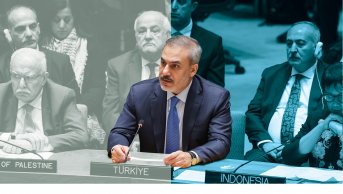
In this sense, an important point is that Turkey and Brazil voted against the draft resolution proposing sanctions for Iran in the UNSC. In the last instance, despite Lebanon’s neutral vote, Turkey and Brazil’s “no” vote were not enough to block the sanctions, Turkey was apparently in opposition to the West, even though it claimed to be a member. Russia and China voted “yes,” and this is another important point.
Turkey’s decision on this subject will increase the tension between Turkey and Western nations. Turkish-Israeli and Turkish-US relations may be worsened by Israel’s attack on a Turkish aid ship in international waters. The West thinks that after these events these precedents Turkey’s foreign policy may be ingrained.
Turkey’s ‘no vote’ is directly related to the power around Turkey. After the crises of 2003 Iraq Turkey is on the opposite side with Western for the first time. From now on Turkey, a developing country, will be more active about the changes in her own area and Turkey may contradict Western policies.
The no vote, is important to keeping the nuclear exchange alliance relevant. Turkey shouldn’t be expected to act like this reconciliation never happened, or be passive and abstain. This would have be contradicted Turkey’s growing power.
Recently, Turkey’s reaction to the attack on the aid ship and its policies on the West and Iran are compatible with its core. Turkey, who wants no crises, and cares about the solutions for regional problems, mutual economical dependence and gives importance to values, cannot be expected to make it policies match those of the West. After all this, it is expected that this trend will continue to accelerate.